
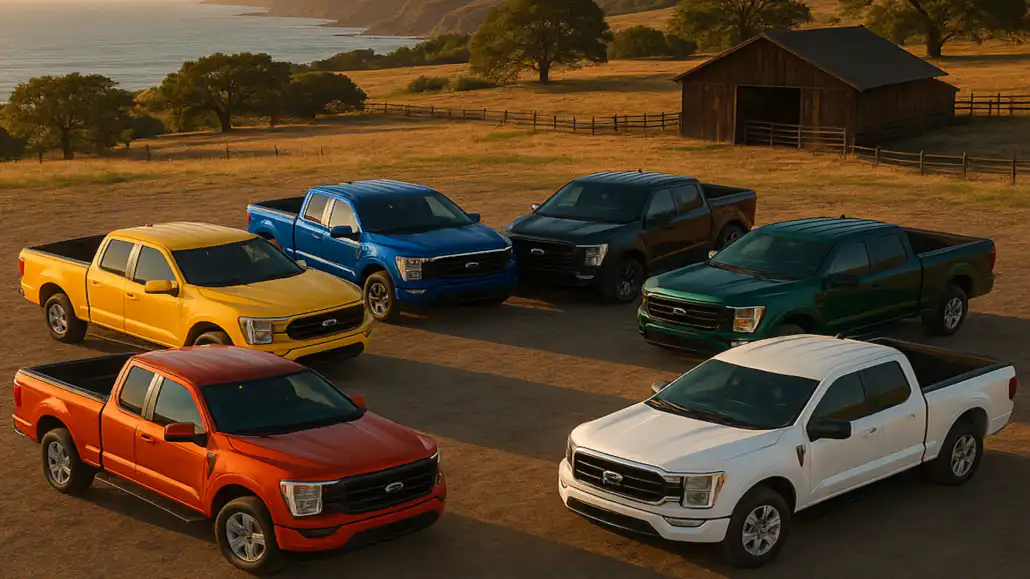
Why Color Matters: Introducing the ScratchesHappen Color Series
From red’s urgency to silver’s trickery, a look at how automotive paint color behaves
July 16, 2026
Automotive paint is as much about perception as pigment. Why does Ferrari red feel like a story in motion? Why does silver look simple until one step to the side makes it shift? At ScratchesHappen, our work and our many customer interactions constantly remind us that touch-ups aren’t just about paint — they are about understanding color. These quirks of perception and pigment are what make automotive paint so interesting.
What the Color Series explores
Each post in the Color Series takes one automotive color and explains why it stands out — not just visually, but scientifically and culturally.
- Red: Explains why our eyes notice red faster than any other color — the same wiring that makes traffic lights and brake lights so effective.
- Blue: Shows how transparent pigments create blue’s sparkle — and why that layered depth makes coverage different from other paints.
- White: Reveals why white ranges from simple solid finishes to complex pearl and tri-coats that shift with light.
- Black: Explains why black delivers unmatched gloss and drama — and why it also shows every scratch and swirl.
- Silver/Grey: Unpacks how metallics shift with light and angle — the shimmer that makes them dazzling from one view and shadowy from another.
- Yellow: Explains why yellow can lean green in some light and orange in others — and why it always stays highly visible.
- Orange: Explains why orange feels so vivid and “alive” — how overlapping red and yellow wavelengths amplify brightness.
- Green: Reveals why deep greens seem to disappear at dusk — how our eyes lose sensitivity to green light in shadow.
Why this matters for you
We built this series because customers often ask: Why does my red fade? Why does my silver change color? Why does my yellow look green in some light?
These aren’t just technical questions. They’re human ones, rooted in how we see and experience color. By turning those frustrations into curiosity, we can help the paint and color come alive for you — and feel less intimidating.
Stories, not formulas
The Color Series isn’t about how-to or step-by-step instructions. (We have our Knowledge Base help articles for that.) It’s about stories, science, and the traits that make automotive paint so compelling. We hope you’ll read about your colors in the series and come away seeing your car’s finish a little differently. That’s why we explain how each color works — so you understand what makes it distinctive, and what to keep in mind as an owner.
Ready to match your color?
Every ScratchesHappen color is mixed to the exact OEM formula — using the same professional paint systems body shops trust — so your touch-up looks the way the color was meant to.
FAQ: Why color matters
The Color Series is a collection of articles that each take one automotive color and explain why it behaves the way it does — visually, scientifically, and culturally. It covers red, orange, yellow, green, blue, white, black, and silver/grey, exploring questions like why red grabs attention, why silver shifts with the angle you view it from, and why yellow can look green in some light.
No. The Color Series is about the stories and science behind automotive color, not step-by-step application. For hands-on repair instructions — how to prep, apply, and finish touch-up paint — see our Help articles. The Color Series is here to help you understand your color; the Help center is here to help you fix it.
Color perception affects how a finish reads in different light, which is why the same paint can look slightly different indoors versus outdoors, or at noon versus dusk. Knowing how your color behaves helps set expectations for a repair and makes it easier to judge a match under the right lighting. Every kit is matched to the OEM formula color — understanding the color just helps you see the result the way it’s meant to be seen.
Related content
Discover stories that connect color, craft, and science behind the allure and armor of automotive paint.
- From the ScratchesHappen Color Series:
- Red Automotive Paint: Why Our Brains Notice Red Faster
- Black Automotive Paint: Mirror Finish or Every Flaw on Display
- White Automotive Paint: How It Ranges from Basic Whites to Tri-Coat Finishes
- Orange Automotive Paint: Why Some Blaze and Others Look Dull
- Silver and Grey Automotive Paints: Why They Change with Light and Angle
- Blue Automotive Paint: Transparent Pigments at Work
- Green Automotive Paint: Vivid Outdoors and Dark in Shadow
- Yellow Automotive Paint: Why It Shifts Between Green and Orange
- More on Paint and Color:
- From NASA to Nanopigments – Discover how super small-scale (nano) science gives premium paints their depth and shine.
- Acura’s Precision Paint Process – Read how supercar-grade paint techniques shaped today’s everyday finishes.
- Not All Car Colors Cover Equally – Understand why red and blue pigments can need extra coverage.
- Explore: Introduction to Human Vision and Color Perception — Evident Scientific – Read how humans perceive color and light.



Leave a Reply
Want to join the discussion?Feel free to contribute!