
 © 2026 ScratchesHappen USA
Not All Car Colors Cover Equally
Why red and blue paints need extra coats
Red and blue paints are two of the most commonly under-applied colors in our lineup. Understanding why these pigments need extra coverage can help you get the color match you want — and avoid shortcut regret.
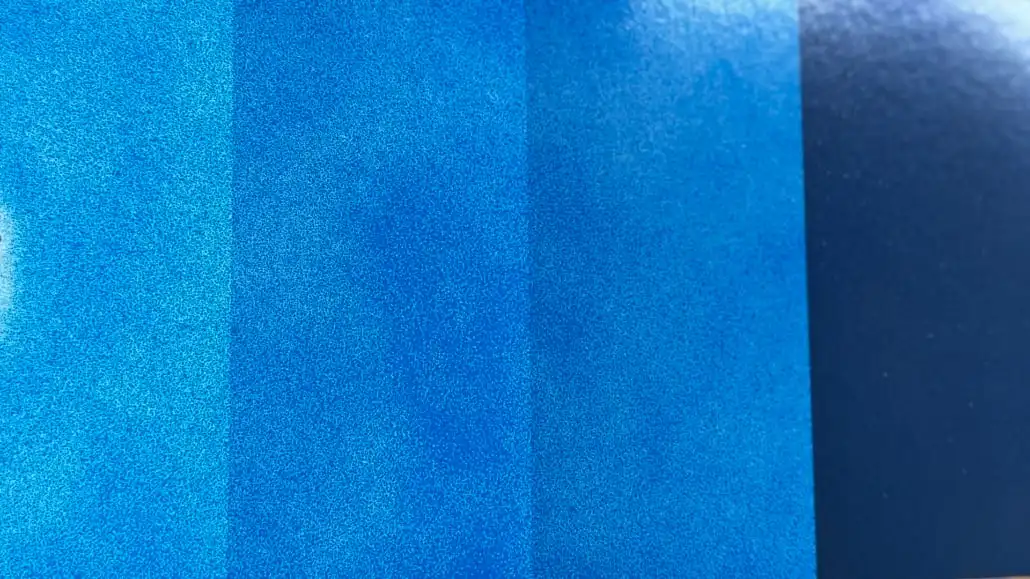
Red and blue paints have a reputation: gorgeous, bold — and a bit demanding. That’s intentional. These colors are engineered for vibrancy, not brute-force coverage, and their metallic or pearl effects only shine when they’re built up in layers. In this post, we’ll explain why they take more coats.
It all comes down to pigment properties:
- Lower Opacity: Red and blue pigments tend to be more transparent, requiring more coats to fully cover the surface beneath.
- High-Chroma Colors: Bright reds and deep blues are formulated for intensity and vibrancy — but that often requires extra coats. An example is Mazda Soul Red Crystal (46V)
- Metallic or Pearl Effects: Many red and blue finishes include metallic or pearl particles. These need to be built gradually to maintain evenness. An example is Ford Velocity Blue Metallic (E7)
How many coats do I really need?
Let’s look at an example from our mixing lab. Below are real spray cards showing how red builds across five coats.
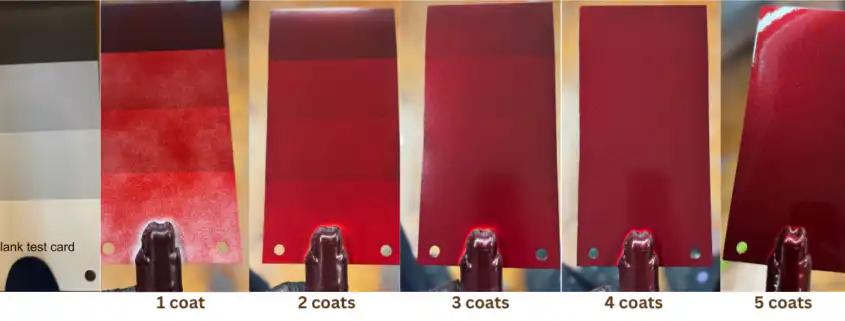
Coat 1: substrate influence visible → Coat 5: red tone locked, sparkle aligned.
The same applies to many blues:
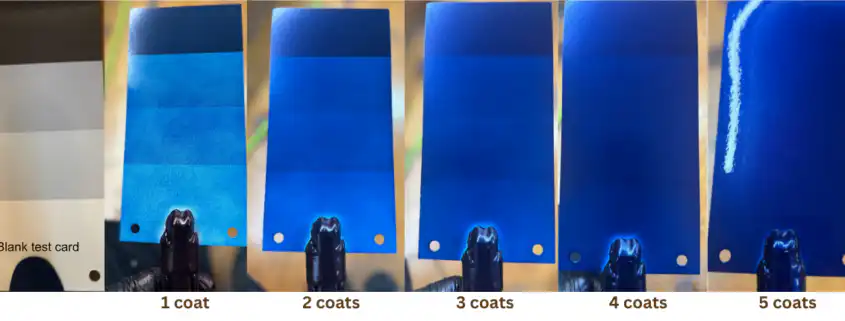
Coat 1: substrate influence visible → Coat 5: full blue tone achieved.
A good rule of thumb for bold reds and blues: plan on at least 4–5 light coats for full color development.
Mistakes we see (and how to dodge them)
- One heavy coat = runs, sagging, blotchy metallics
- Checking the test card indoors instead of outdoors = color may look different; natural light shows the true tone
- Skipping test panels = surprise results, especially for tri-coats or metallics.
Need help matching your paint type or picking the right primer base? Our team’s happy to help.
FAQ: Why do red and blue paint need more coats?
No, heavy coats can sag or distort metallics. Always build up gradually.
Sometimes, yes. Larger areas or high-contrast panels may require extra product. Reach out if you need help estimating.
Bottle and aerosol applications differ slightly. Rule of thumb though, make sure each coat has flashed off before applying the next coat. Your instructions will specify the times for your paint application.
Related content
- From the Color Series:
- Watch: Blue Automotive Paint Mixing Playlist – Watch our team mix OEM blue paints step by step (YouTube).
- Help Article: Applying Tri-Coat Layer 2 (L2 is a mid coat), Metallic or Pearl Finish Paint – Read how metallic and pearl coats are applied.
- Explore: Color Red Increases the Speed and Strength of Reactions — ScienceDaily – Learn about the human biological reaction to red color.



Leave a Reply
Want to join the discussion?Feel free to contribute!