

Black automotive paint: Mirror finish or every flaw on display
December 18, 2025
Black automotive paint delivers unmatched gloss and depth, but that same mirror finish highlights every flaw—swirls, scratches, and dust. Its clarity makes black irresistible when new, yet unforgiving once surface defects scatter light and break the reflection.
Nothing looks deeper than a freshly polished black car — the surface seems endless, like a pool of liquid color. The same depth makes black brutally honest: even the smallest swirl, dust speck or scratch snaps your eye to the imperfection. Because black absorbs almost the entire visible spectrum, tiny breaks scatter light in every direction, making flaws pop in a way lighter colors can hide. That’s why we explain how black works — so you understand what makes it distinctive, and what to keep in mind as an owner.
The dark mirror effect
Black paint’s depth and reflective clarity come from its ability to bounce light back evenly from a smooth, glossy surface. When that surface is disrupted—even slightly—light scatters unevenly instead of reflecting cleanly.
The result is a visible break in reflection, perceived as haze, dullness, or patterning instead of a clean mirror finish.
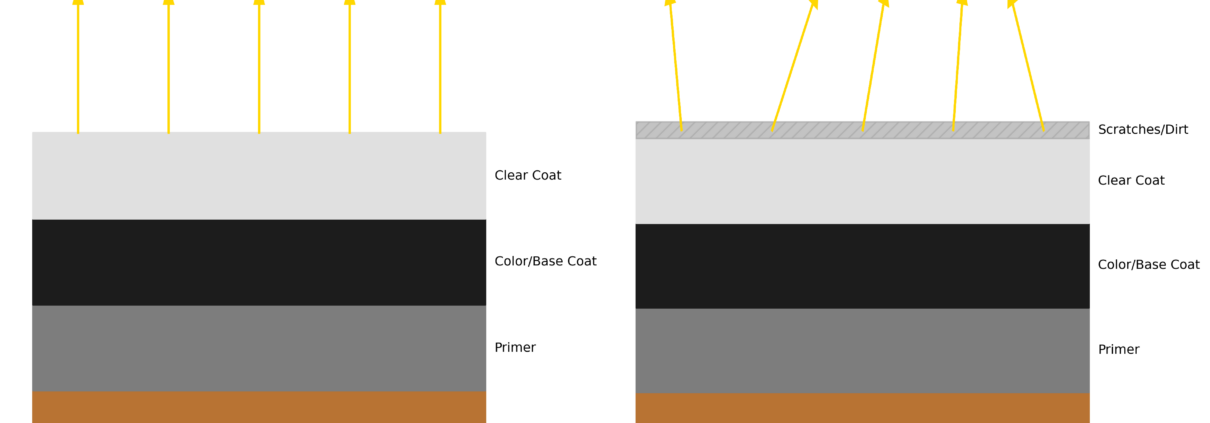
Illustration of how light reflects evenly from a clean, glossy black surface versus how it scatters upward when the clear coat has scratches or dirt.
Culprits that mar a black paint finish
-
Washing technique: Soiled wash mitts or abrasive compounds create circular micro-scratches that disrupt light reflection.
-
Washing damage: Wash-induced damage, especially from automated “brush” car washes. The wax can temporarily mask the damage only to reveal swirls later.
-
Oxidation & fading: Older or single-stage paints are more prone to this. UV exposure erodes clarity and creates dull, chalky areas or discoloration.
-
Water-spot etching: Hard-water areas leave minerals that burn tiny pits into the clear coat.
-
Environmental contaminants: Pollen, dust, or bird droppings are more visible on black and can etch or blemish the surface if left unattended.
-
Heat absorption: Black paint soaks up more sunlight, amplifying UV damage and thermal wear.
Black paint in the real world
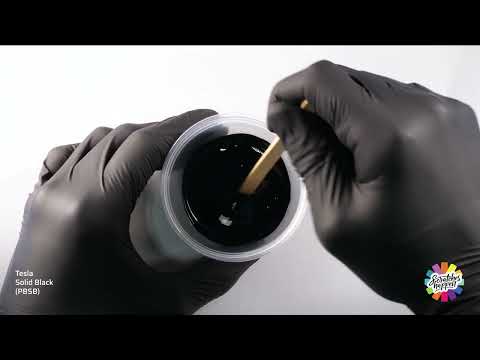
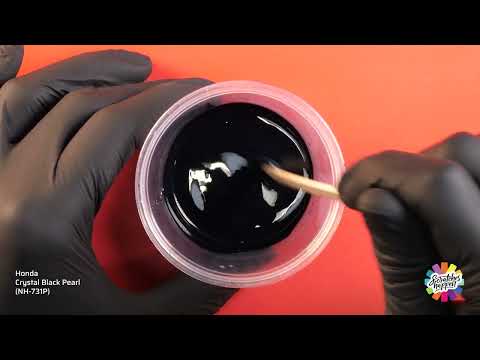
Black paint doesn’t just come in “one black.” OEMs build multiple variations — from deep solid blacks to subtle metallics that sparkle under light. A pure solid like Tesla Solid Black (PBSB) looks inky and uniform, while a finish like Honda Crystal Black Pearl (NH-731P) adds silver flake for depth and shimmer. What they all share is honesty: every scratch or swirl shows more clearly than on lighter finishes. That’s why we recommend always using a test card before painting the vehicle — you’ll see the true tone dry, whether it’s solid or metallic, before it goes on your panel.
Black can look blue or green in the bottle and when wet
Black paint doesn’t always look jet black at first glance. In liquid form, the solvent suspends the pigments, and that layer can bend light in ways that make the paint appear bluish or greenish in the bottle or when freshly applied.
This is a normal optical effect. Wet paints rarely resemble their final, dry color. As the solvent evaporates, the way light passes through the paint changes, and the true depth of the black becomes visible. On a test card, it’s common to see a greenish or bluish cast at first that disappears once the paint has fully set.
Why black touch-up paint can look wrong before it’s fully dry
Because black reflects light so evenly when it’s smooth, even small changes during drying are easy to notice. Freshly applied touch-up paint may look lighter, glossier, or slightly different from the surrounding area while solvents are still evaporating.
This doesn’t indicate a color mismatch. It’s a temporary phase of the drying process. As the paint cures and settles, the surface reflection evens out and the depth of the black becomes more accurate.
Judging the match too early is the most common source of concern with black paint repairs. Allowing the paint to fully dry before evaluating the result leads to a much more accurate impression of the final color.
Living with black paint over time
Can I use the same polish compounds for paint correction as I would for touch-up paint repairs?
Not really. While some products share similar names, the context is different. After a touch-up repair, polishes or compounds are used lightly to refine a very small area — not to change the overall surface.
If you’re curious why different compounds behave differently, we explain the distinction in more detail in our article on what polish compounds work well for touch-up paint jobs.→
Can swirl marks actually be fully removed?
Swirl marks are fine surface marks that change how light reflects across black paint. Because black reflects light so evenly when it’s smooth, even very small disruptions can create visible haze or circular patterns.
What matters most for owners is recognizing that swirl marks don’t change the color of the paint — they affect how light behaves at the surface. That’s why they’re easy to see on black and much harder to notice on lighter colors.
Understanding this helps set expectations: black paint can look flawless under the right conditions, but it also shows surface wear more quickly than most other finishes.
Black automotive paint — at a glance
-
Surface buildup: Black paint shows dust, salt, and pollen quickly because even light contamination disrupts its mirror-like reflection.
- Contact sensitivity: Minor surface contact can create visible micro-scratches that stand out more on black than on lighter colors.
Black paint is unapologetically honest—it reflects every flaw. But with mindful care, thoughtful correction, and diligent protection, that mirror-like finish can last. That’s why we explain how each color works—so you understand what makes it distinctive, and what to keep in mind as an owner.
FAQ: Black automotive paint
Black paint looks blue or green in the bottle?
Yes — black can look blue or green in its liquid form due to un-evaporated solvents. Doing a test application on a test card will show you how it dries to black.
Why does black show scratches more than other colors?
Black absorbs nearly all visible wavelengths, so even small scratches scatter that light in random directions. Your eye immediately notices the break in reflection, while lighter colors disguise it better.
How do I know if my black car needs paint correction?
This question comes up often with black paint because surface marks are easy to see. Not all visible marks indicate paint damage — many affect how light reflects rather than the color itself.
Can I maintain black paint at home after correction?
Yes, regular washing, microfiber-only contact, and using ceramic sprays can keep a corrected finish sharp for years.
Related mixing videos (black series)
Watch: Factory-accurate black mixing demonstrations from our technicians.
Tesla Solid Black (PBSB) — OEM Formula Color Mixing
Honda Crystal Black Pearl (NH-731P) — OEM Formula Color Mixing
Black mixing playlist: Watch the full playlist on YouTube →
Related content
Discover more stories exploring color — and the allure and armor of automotive paint.
- From the Color Series:
- Help Article: Applying Tri-Coat Layer 2, Metallic or Pearl Finish Paint – Read how metallic and pearl coats are applied.
- Explore: Why Black Cars Are Hard to Keep Clean (And How to Fix It) – Read a car detailer’s perspective on black paint.